The man who did everything right and still got it wrong
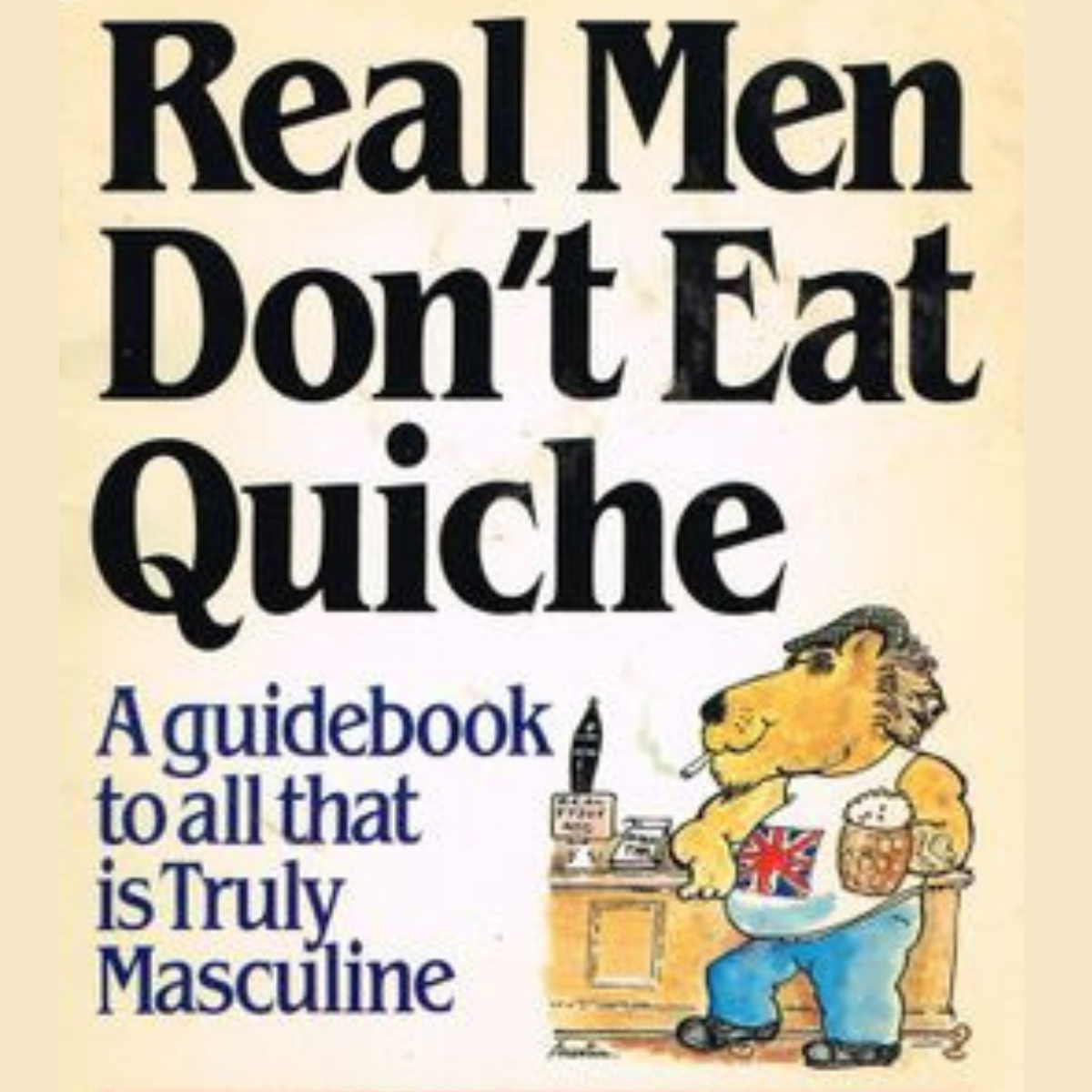
In 1982, Bruce Feirstein published Real Men Don’t Eat Quiche, a satirical bestseller targeting a new species of American male. These men wore sweaters, sipped white wine, discussed their feelings, and prepared elaborate French dishes for their girlfriends. They were sensitive, emotionally available, and deeply in touch with their feminine side. They were also, Feirstein suggested, ridiculous.
The book sold millions because it named something everyone had noticed: a new male archetype had emerged, and something about him felt off. The Sensitive New Age Guy—or SNAG—represented the male half of a grand cultural experiment in gender convergence. Women were being told to become more assertive; men were being told to become more sensitive. The experiment did not fail as completely as sometimes claimed, but it ran up against limits that no amount of ideology could override.
The making of the SNAG
The SNAG didn’t emerge from nowhere. He was manufactured by specific cultural and economic pressures converging in the late 1970s and early 1980s.
By 1980, women’s workforce participation had reached 51.5%, up from 37.7% in 1960. For the first time, most American women were competing in traditionally male domains where assertiveness determined success. The self-esteem movement, examined in depth in my book Costly Signals: The Evolution of Dating Advice, promised women that cultivating traditionally masculine traits would help them succeed in both work and romance.
But what were men supposed to do while women became more assertive? The cultural script was clear: become more sensitive. Men were expected to do housework, change nappies, and spend quiet evenings at home. Emotional openness replaced stoic reserve as the masculine ideal. This shift reflected genuine economic changes—Western economies moving from manufacturing toward service sectors where communication and collaboration mattered more than physical strength.
The feminisation of the economy appeared to demand a feminisation of men.
The mating market mismatch
The problem was that attraction doesn’t follow economic trends.
The cultural experiment encouraged a partial “dual gender inversion.” Women developed traditionally masculine traits—assertiveness, confidence, and career ambition—while many men cultivated traditionally feminine ones—emotional openness, sensitivity, and vulnerability. In theory, these newly assertive women and newly sensitive men would find each other perfectly compatible. In practice, while some certainly did (and many egalitarian partnerships thrived), a persistent pattern emerged: initial romantic and sexual attraction often remained anchored to older preferences.
The confident career women of the 1980s discovered something troubling: they weren’t always attracted to the highly sensitive men they claimed to want. The SNAGs found that emotional availability alone didn’t generate the attraction they’d been promised. Both sexes often followed the cultural script faithfully yet still encountered friction in the mating market.
This wasn’t a total failure of the experiment—many people formed happy relationships with sensitive, egalitarian partners—but it revealed limits. The self-help culture assumed attraction was essentially rational—that people would desire partners matching their stated preferences. Evolutionary psychology suggests otherwise. Women’s attraction cues evolved over millions of years in environments where male dominance and confidence often meant survival advantages. These deep mechanisms don’t fully rewrite themselves in a single generation.
Women show increased attraction to masculine features associated with confidence, risk-taking, and social dominance—precisely the traits many SNAGs had been encouraged to downplay. Excessive sensitivity could sometimes signal weakness rather than strength.
The costly signal that wasn’t
From an evolutionary perspective, the SNAG phenomenon highlights the limits of costly signaling theory applied to sensitivity.
Costly signals work because they’re expensive to fake. A Victorian gentleman’s elaborate manners signaled genuine resources and self-discipline because maintaining such standards required years of investment.
What did the SNAG primarily signal? Verbal emotional expressiveness and willingness to share household duties. These can be cheap signals—any man can talk at length about his feelings or promise to do the dishes. There’s low barrier to entry and little honest indication of deeper quality.
Worse, unchecked emotional expressiveness (as opposed to selective vulnerability) often functioned as a negative signal. Genuine vulnerability—choosing to open up from a position of strength and emotional regulation—can be attractive because it is costly and reveals resilience. In contrast, constant emotional processing, conflict avoidance, or deferral can suggest lower capacity for protection and leadership in ancestral terms.
The men who succeeded romantically weren’t usually the purest followers of the sensitivity script. They displayed traditional markers of mate quality—confidence, ambition, social dominance—while adding selective emotional availability. The “bad boys” continued attracting partners while many overly sensitive men found themselves in the “friend zone.”
The pickup artist correction
The SNAG archetype didn’t fail spectacularly across the board—sensitivity and emotional openness found a valued place, especially in long-term committed relationships where cooperation and empathy matter most. But in the domain of initial attraction and sexual chemistry, the pure SNAG script often underperformed expectations, creating widespread frustration.
By the late 1990s, an underground community had begun systematically studying what actually generated female attraction, as opposed to what women said they wanted. The pickup artist movement represented a direct repudiation of the most extreme SNAG philosophy.
Where the pure SNAG suppressed confidence, pickup artists cultivated it. Where he avoided risk, they embraced it. Where he prioritised unrestricted emotional availability, they understood that strategic selectivity could increase desire. The movement succeeded because it acknowledged what the sensitivity script sometimes denied: attraction follows predictable biological patterns that cultural programming cannot fully override.
This wasn’t simply a return to 1950s masculinity. Later iterations of pickup advice, particularly in the 2010s, emphasised genuine self-improvement: physical fitness, career development, social skills, and psychological resilience. The focus shifted from manipulating women to becoming genuinely attractive—building real value rather than performing sensitivity.
This represented a return to costly signaling, updated for the modern era. Any man can claim sensitivity, but not every man can build a successful career, maintain physical fitness, and develop genuine social confidence.
What the SNAG got wrong
The sensitive new age guy stumbled because he was built on a partial misunderstanding of human attraction.
The self-esteem movement that helped create him assumed cultural narratives could fully override biological imperatives—that if we told men and women to find certain traits attractive, they would. This ignored millions of years of evolutionary selection pressure shaping mate preferences long before anyone conceived of gender politics.
The SNAG also confused female statements about preferences with female behaviour. Women in the 1980s said they wanted sensitive men. But their actual romantic choices—measured by who they dated, slept with, and married—often told a different story. The SNAG took stated preferences at face value and was bewildered when reality didn’t match.
The SNAG believed he could attract women by becoming what culture said they wanted. His successors learned that attraction responds to honest signals of mate quality: genuine capability, selective vulnerability rooted in resilience, and the mature expression of masculine traits. Not performed or unrestricted emotional expressiveness, but emotional strength.
No amount of ideological wishful thinking can fully change that.
For more on how evolutionary psychology has shaped dating advice from the Victorian era to the present day, check out my book Costly Signals: The Evolution of Dating Advice.
Leave a Reply