
Looksmaxxers think they’re attracting women, but the research says otherwise
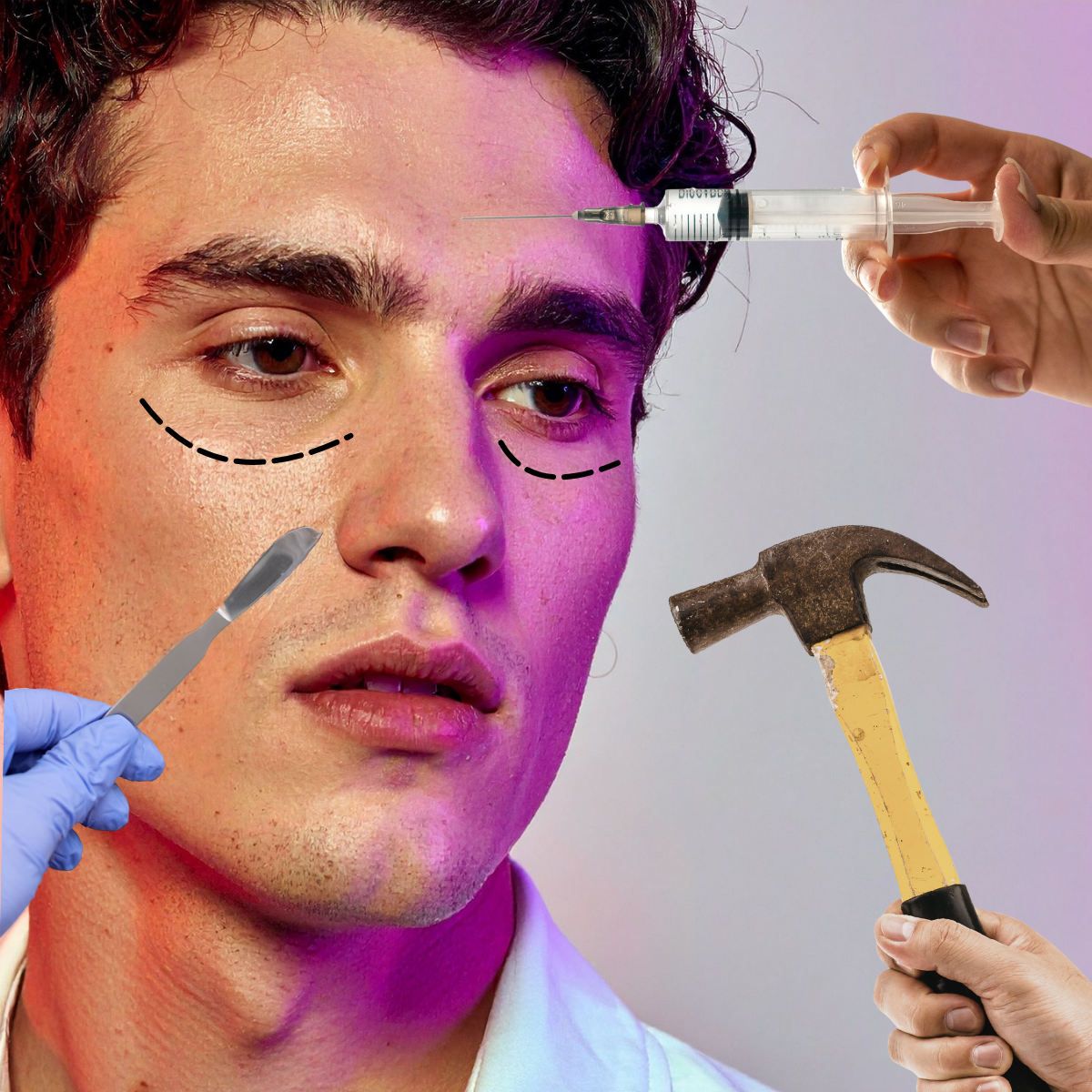
In February 2026, twenty-year-old streamer Braden Peters, known as Clavicular, closed a New York Fashion Week show looking every inch the ideal of chiseled masculinity: square jaw, angular features, lean and broad-shouldered. Few in the audience knew he had built that look by injecting testosterone since he was fourteen, smoking methamphetamine to stay skeletal, and hammering his own face to force the bones to regrow sharper.
The moment was celebrated as looksmaxxing gone mainstream. The more interesting story is what it really reveals about the men doing it.
What women actually prefer
The looksmaxxing community has a clear idea of the male attractiveness hierarchy. Jawline definition, clavicle width, low body fat, “hunter eyes”—each feature is rated, ranked, and optimized for. Underlying all of it is a single assumption: that women want the most physically masculine man available.
The research suggests otherwise. A 2020 study by Xue Lei and David Perrett, published in the British Journal of Psychology, asked men and women to manipulate 3D body models to represent ideal attractiveness. Men overestimated the heaviness and muscularity that women preferred, and the misperception was more pronounced for short-term relationships than long-term ones.
A separate analysis of men’s and women’s magazines found the same pattern from a different angle: the ideal male body marketed to men is more muscular than the ideal male body marketed to women. The same disconnect appears in facial features. When researchers asked women to adjust male faces to their preferred level of masculinity, men significantly overestimated women’s preference—the masculinity was toned down compared to the versions men themselves imagined women wanted.
Women prefer a moderately athletic build and a face that stops well short of the chiseled ideal. They’re not so interested in the model on a Muscle & Fitness cover or a jaw that required a hammer to achieve.
Competing with the wrong people
Why the gap? The most persuasive explanation isn’t media manipulation or body dysmorphia, but rather intrasexual competition. Men aren’t primarily calibrating their appearance signals for women. They’re calibrating them for other men.
Researchers have proposed that media aimed at each sex intensifies competition over specific physical traits within that sex, driving aspirations further and further from what the opposite sex actually finds attractive. The arms race is happening between men, not between men’s and women’s expectations.
This is consistent with how costly signals work more broadly. When a signal becomes tied to status competition within a group, it tends to escalate beyond what the original audience actually finds attractive. Looksmaxxing’s obsession with extreme jawlines and maximum muscularity looks less like mate attraction and more like a dominance display aimed at other men.
The parallel extends to women. A study by Jones, Kramer and Ward, published in the Quarterly Journal of Experimental Psychology, found that both men and women preferred faces wearing significantly less makeup than women typically applied. Both sexes, however, assumed men would want more. Women are calibrating their cosmetics use against a male preference that doesn’t exist in the form they imagine. Both sexes are partly performing for audiences of their own gender, and both are miscalibrating as a result.
The looksmaxxing echo chamber
The intrasexual competition explanation becomes sharper when you consider who is most deeply invested in looksmaxxing. The practice originated in, and remains closely tied to, incel communities—and incel communities are characterized by severe social isolation. A 2018 poll of nearly 300 members of the incel forum incels.co found that only one-third reported having at least one friend.

The forums where looksmaxxing norms are developed are male-only spaces, with some explicitly banning women from participation. These are men developing a detailed theory of female preference in an environment with no women in it, rating each other’s jawlines against standards they have collectively invented.
There is a deeper irony here. The rise of looksmaxxing indicates that many young men have little confidence they can attract a partner through personality or social skills. Yet personality and social confidence are precisely what women weigh heavily in long-term mate choice—and precisely what men spending their time in male-only forums rating bone structure are not developing.
Softmaxxing is fine; hardmaxxing is a misfired signal
None of this means investing in physical appearance is irrational. Going to the gym, improving your skincare routine, dressing well—these are legitimate, honest signals of underlying condition, and the research confirms that moderate fitness and grooming do increase male attractiveness to women.
The problem is specific to hardmaxxing. The extreme end of the spectrum is driven by an escalating arms race among men who are largely cut off from the women they are nominally trying to attract. Bonesmashing, jaw surgery, and steroid abuse are costly signals, but costly in the wrong sense. They impose genuine physical harm in pursuit of a standard that women didn’t set and don’t particularly endorse.
Braden Peters walked the New York Fashion Week runway looking, by any conventional measure, extremely good. What the looksmaxxing community took as vindication might be read differently: a young man who has spent years optimizing his appearance for the approval of an online male audience, finally receiving that approval—from the fashion industry, which has its own complicated relationship with masculine ideals—while the women in his life remain, in his own terminology, “targets.”
The costs of that optimization are worth noting. Peters has acknowledged that years of steroid use left him infertile by 2025, his body no longer naturally producing testosterone. In April 2026, he was hospitalized in Miami after a suspected overdose during a livestream, using substances he later said he took to help him “feel neurotypical” in public. Hardmaxxing had produced a physique compelling enough to close a Fashion Week show and a young man unable to socialize without pharmaceutical assistance.
There is a further irony in Clavicular’s appeal as a figure. As the plastic surgeon and YouTuber Dr. Gary Linkov has observed, part of what makes him compelling to watch is the unresolved tension between what he has and how far he still wants to go—the implicit message being this: if this isn’t enough for him, what does that mean for the rest of us? It is a strange kind of aspirational content that communicates, at its core, that the standard is unreachable.
The signal reached its intended audience. It just wasn’t women.
For comprehensive insights into all things dating, attraction, and sex in the media, stay tuned for my upcoming book Costly Signals: The Evolution of Dating Advice.
Leave a Reply