Why 1990s dating anxiety never went away
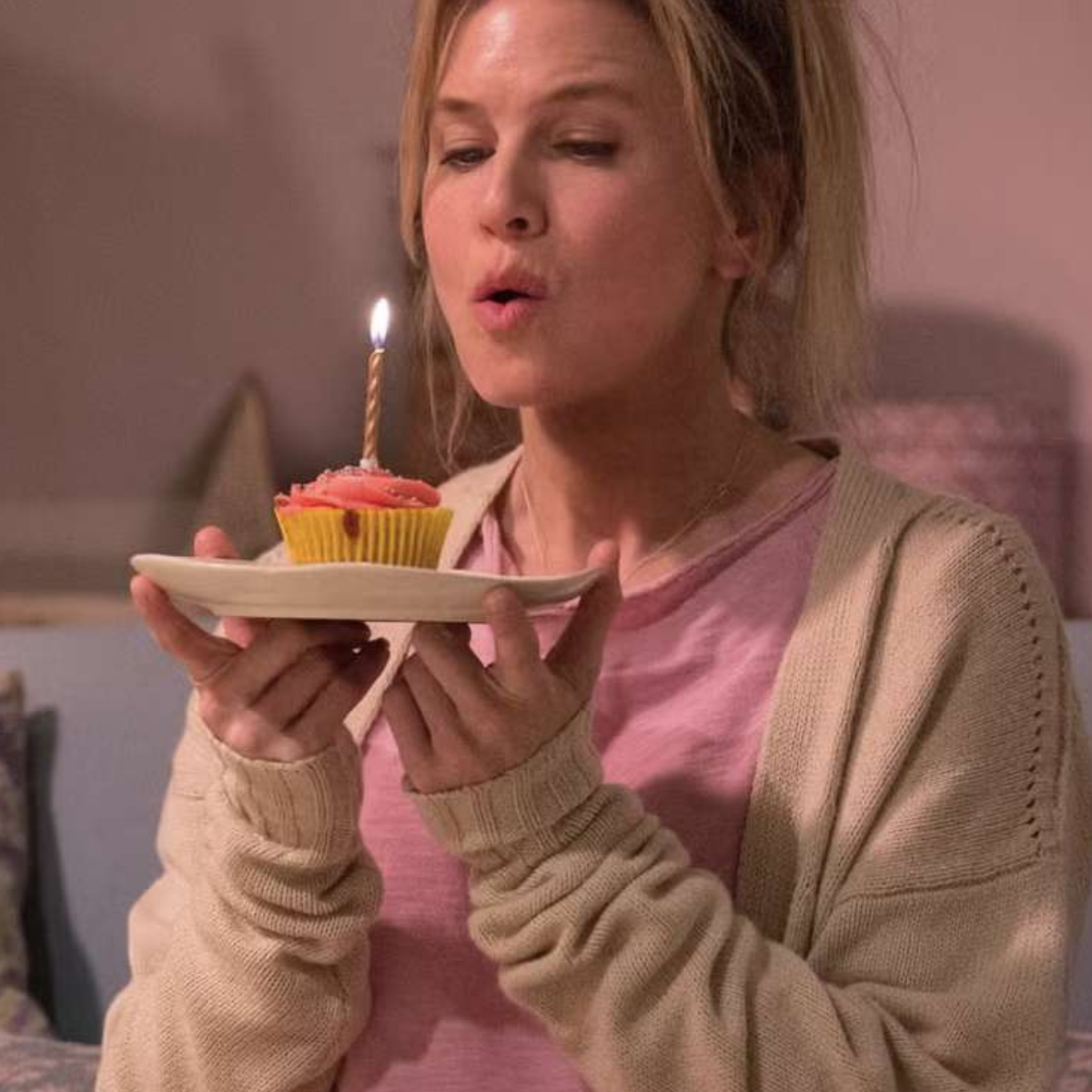
In February 2025, Renée Zellweger returned as Bridget Jones in Mad About the Boy, the fourth film in a franchise that began over 20 years ago. The fifty-one-year-old Bridget is now widowed, navigating dating apps and Botox, still charmingly hapless. Critics noted something conspicuously absent: the calorie counts. The obsessive weight tracking that defined the original character has been quietly retired. Yet audiences showed up anyway. The film proved that whatever Bridget Jones represents, it hasn’t gone away—it has simply changed form.
I enjoyed the original when it came out, recognizing many of my twenty-something female friends in Bridget’s neurotic self-scrutiny and large panties. Watching the 2025 sequel—where smoking in the office, chunky Mac desktops, and pre-#MeToo flirtatious bosses have given way to Hinge profiles and filler appointments—I still felt an odd kinship with the now fifty-one-year-old Bridget. But as a man approaching that age myself and single for longer than planned, I couldn’t suppress my less than charitable reaction: why doesn’t she just pick someone and settle down? It’s the kind of impatience that probably says more about male obliviousness than about Bridget herself.
That same year, Celine Song’s Materialists offered a darker take on the same anxieties. Dakota Johnson plays a Manhattan matchmaker whose clients rattle off requirements like stock portfolios: “6’2”, skinny, fit, $200K, $300K.” Song drew on her own experience working as a matchmaker and said she wanted to portray “the brutal side of modern dating.” The film includes a subplot where a client is sexually assaulted by a match—Song’s acknowledgment that reducing people to numbers has consequences. When a TikTok meme circulated during production—“6’5”, finance, blue eyes”—Song recognized it immediately as the mentality her clients embodied.

The comparison is instructive. Bridget’s diary entries opened with weight in stones, alcohol units, and cigarettes smoked. Today’s equivalent is the dating profile: height requirements, salary brackets, and deal-breakers enumerated with clinical precision. The self-surveillance has simply migrated platforms.
The postfeminist trap
Cultural theorist Angela McRobbie argued that Bridget Jones’s Diary exemplified what she called “postfeminist”—an active process by which feminism is acknowledged in order to suggest equality has been achieved, thereby installing the idea that feminism is no longer needed. Bridget enjoys sexual freedom and career independence, yet she is miserable. The text focuses on what McRobbie termed “the pathologies of too much female choice.”
This is the paradox the original novel captured so precisely. Bridget has won freedoms second-wave feminism fought for, yet the narrative suggests these freedoms have made her anxious rather than liberated. The solution offered is romantic: Mark Darcy declares he likes her “very much, just as you are,” and male validation resolves her crisis. Her friends react with disbelief—”Just as you are? Not thinner?”—a line that functions both as satire and as a genuine articulation of the fear that to be above a certain size is to be unlovable.
The diary format externalized what had previously been private. Those daily tallies—weight, calories, vices—externalized the internal monologue that countless women recognized as their own. Here was a protagonist who didn’t merely have insecurities; she catalogued them with obsessive precision. The question is whether Fielding was satirizing or endorsing this self-surveillance. The fact that audiences couldn’t always tell is perhaps the point.
Research published in Psychology of Popular Media Culture later examined what authors termed “the Bridget Jones Effect”—the relationship between exposure to romantic media and fear of being single. The study found that media like Bridget Jones’s Diary and Sex and the City contain a clear message: single women are distressed and miserable. Even works claiming to celebrate singlehood ultimately contradict this by pairing off all characters with soulmates.
New screens, same anxieties
Netflix’s 2024 hit Nobody Wants This updated the formula for the streaming age. Kristen Bell plays a sex podcaster—essentially a professional singleton broadcasting her dating disasters—who falls for a rabbi played by Adam Brody. The show was praised for its “positive Jewish masculinity” but criticized for portraying Jewish women as “male-obsessed and manipulative villains” who exist primarily as obstacles to the gentile heroine’s happiness.
The structure is familiar: a confessional format (now a podcast rather than a diary), a flawed but loveable heroine, and romantic validation as the cure for existential uncertainty. Created by Erin Foster, who converted to Judaism after meeting her husband, the show literalizes what Bridget Jones implied—that the right man resolves the problem of being an unattached woman commenting on her own romantic failures.
Yet the dating landscape these texts depict has transformed utterly. Bridget met men at dinner parties and office Christmas functions. Today’s singles navigate algorithmic marketplaces designed to maximize engagement rather than connection. A 2024 Forbes Health survey found that 79 percent of Gen Z users report burnout from dating apps. Tinder lost 594,000 users that year. Recent Kinsey Institute research (including surveys in partnership with DatingAdvice.com and others) highlights a shift, with only about 21 percent of Gen Z citing apps as their primary way to meet partners, while a majority—around 58 percent in some studies—focus on in-person meetings and organic connections.
The backlash has a name: “dating app fatigue.” Young women describe the experience as dehumanizing—one student told researchers that swiping felt like “shopping for a guy.” The gamification, the endless introductions, the ghosting and breadcrumbing have produced a generation that craves what Bridget took for granted: organic encounters, office romances, the slow build of attraction through proximity. Speed dating events and “intentional dating” meetups are booming as young people seek alternatives to the swipe. The irony is rich: a generation raised on infinite choice now yearns for the constrained dating pools their parents navigated.
What the continuity reveals
Helen Fielding has reflected that if she were writing Bridget today, the character would likely be more content—happily single or at ease with her singlehood, without the same desperation for romantic resolution. This admission from the creator herself suggests that even Fielding views Bridget’s pursuit of partnership as historically contingent rather than universal.
The data supports this. Office for National Statistics figures from the 2021 Census show that for adults aged 30 to 34 in England and Wales, the proportion who have never married or been in a civil partnership rose significantly—from 49.2 percent in 2011 to 58.9 percent in 2021 (with variations by gender: around 54.2 percent for women and 63.8 percent for men in some breakdowns). Singlehood is increasingly embraced rather than pathologized.
Yet the anxieties Bridget crystallized persist in mutated form. Materialists depicts clients who have replaced calorie counting with salary requirements and weight tracking with height filters. The commodification Bridget’s diary hinted at has become explicit and algorithmically enforced. Nobody Wants This offers the same fantasy of romantic rescue, updated for the podcast age—the confessional format now broadcast to millions rather than scribbled in a journal. Gen Z’s rejection of dating apps represents not an escape from the marriage market but a longing for an earlier version of it—one where connections felt organic rather than transactional, where you might meet someone at a party rather than assembling them from a checklist.
Fielding killed off Mark Darcy in the third novel because she did not want Bridget to become “smug married.” There’s something telling in that choice—the recognition that the character only works as a perpetual striver, never as someone who has arrived. Bridget Jones captured a cultural moment of acute anxiety about female choice and its consequences. The calorie counts are gone from the latest film, but the fundamental question remains. The form has changed, but the uncertainty has found a way to persist intergenerationally. Bridget’s successors are still searching—not for the right weight, perhaps, but for the right profile, the right app, the right algorithm. The diary has become a dashboard, but the longing is the same.
For more information on the history of dating advice and how it relates to popular cultural representations of romance in romcoms, check out my upcoming book, Costly Signals: The Evolution of Dating Advice.
Leave a Reply