
Why 1950s advice treated the moral code as mate insurance
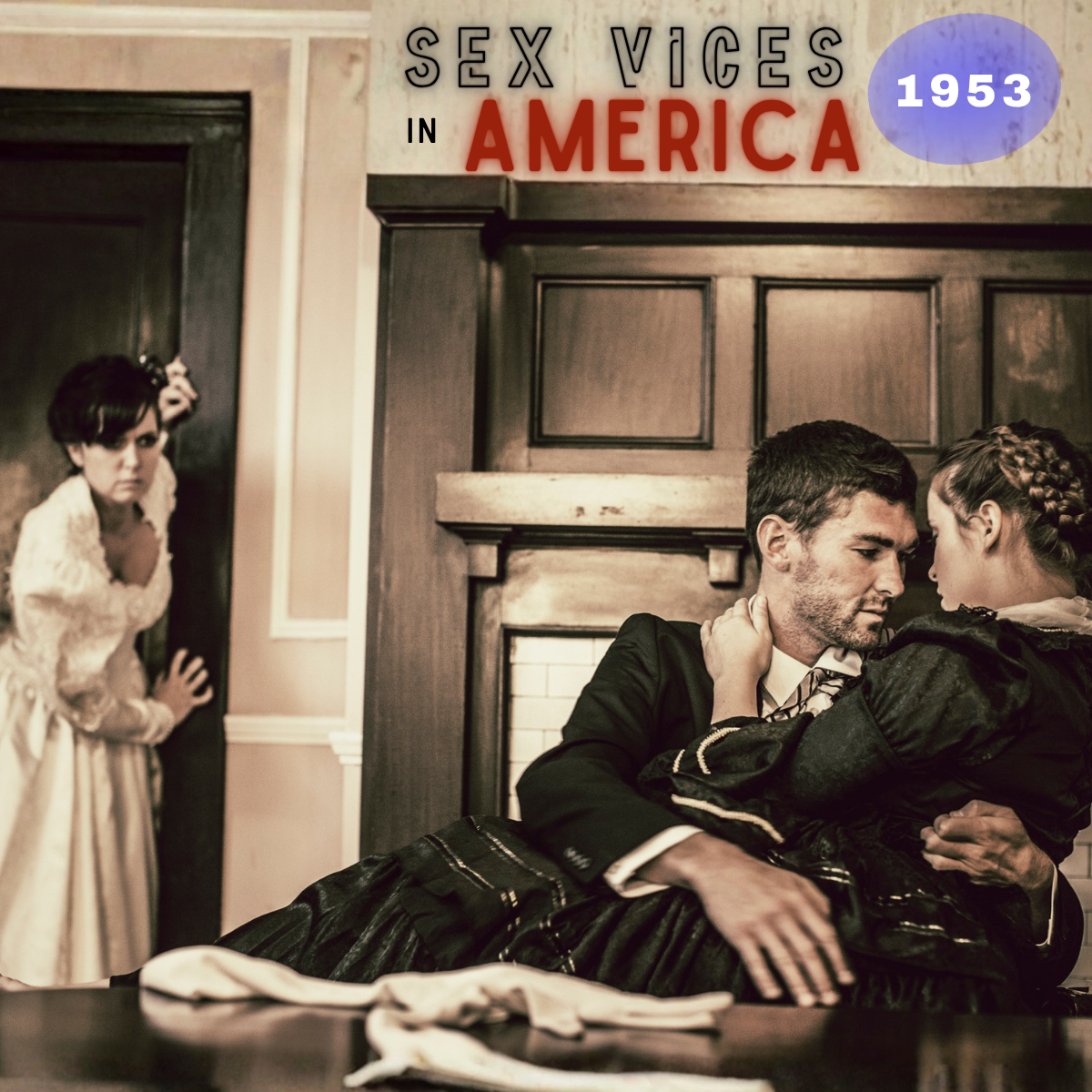
In 1953, psychiatrist Shailer Upton Lawton and writer Jules Archer published Sex Vices in America, promising “a frank and shocking study exposing the hidden and illicit sexual immorality of American men and women.” Beneath the lurid case studies lies a systematic attempt to explain why husbands cheat and what can be done about it.
Chapter Eight, “The Crime of Adultery,” frames commitment itself in a revealing way. For Lawton, a husband’s faithfulness is not an innate moral quality but something constructed and maintained through ongoing effort—primarily by his wife. The “moral code” functions less like a commandment and more like an insurance policy requiring continuous premium payments to remain in force.
Read through costly signaling theory, this framing is illuminating. The moral code operates as a pre-commitment device that raises the internal cost of defection before temptation appears. But such devices do not maintain themselves; they require continuous reinforcement. Lawton’s advice makes clear who was expected to supply that reinforcement, and who was treated as the risk that needed managing.
The Kinsey problem
The Kinsey Reports had landed like a bomb on American sexual consciousness. Lawton opens by confronting the findings:
“ALL husbands are alike,” an old saying goes, “but they have different faces so you can tell them apart.” A modern version of that adage holds that there is only one difference between husbands—whether they are unfaithful sooner or later. The Kinsey findings that a majority of husbands are guilty of infidelity has given ammunition to those who hold that it is only “human nature” for a husband to cheat.
“ALL husbands are alike,” an old saying goes, “but they have different faces so you can tell them apart.” A modern version of that adage holds that there is only one difference between husbands—whether they are unfaithful sooner or later. The Kinsey findings that a majority of husbands are guilty of infidelity has given ammunition to those who hold that it is only “human nature” for a husband to cheat.
Lawton accepts the statistical reality but refuses to treat it as normatively acceptable. His project is to explain why it happens and how wives can prevent it.
The six psychological causes
Lawton dismisses folk explanations—she let her hair go; he always had a wandering eye—as superficial: “No husband commits adultery for reasons as trivial as those advanced by the amateur experts.” Instead, he identifies six psychological causes: the search for variety, the prudish wife, loneliness, escape from intolerable situations, inability to cope with leisure, and anxiety about aging.
Loneliness receives extended treatment: “No one can be more desperately lonely than a man locked in the same house with a woman who takes as much interest in his needs as she would in the needs of furniture.” The case of “Fred O.” is illustrative. His wife met his confidences with apathy, nagged about trivial matters, and treated him as “purely a workhorse and provider.” Resentment built until he decided he would provide the income, but no longer does. He found a mistress “who knew how to listen sympathetically, who made him feel wanted and important, and whom Fred regarded—with cause—as his real wife.”
Anxiety about aging targets successful middle-aged men. “Walt C.” began worrying at 48 that he was no longer as potent as before. Tied to this was regret for lost youth and fear of death. Ashamed, he said nothing to his wife, who therefore offered none of the reassurance middle-aged husbands need. His solution was “a campaign to seduce every woman who was amenable.”
The moral code as insurance
Having catalogued the causes, Lawton turns to prevention. The moral code becomes the central concept:
Many husbands lack a strong moral code because of the failure to build close bonds with their wives. A smart wife, who works hard at her marriage, will inspire in her husband a strong and dogged devotion. Feeling that, and wishing to protect his marriage, he will want a firm moral code, and will develop it himself. Marriages like this are built to last.
The logic is transactional: heavy investment by the wife creates conditions in which the husband wants to remain faithful because he has too much to lose. Without this internal commitment device, husbands become vulnerable: “The lack of a resolute moral code opens the door to any of the other five psychological reasons why husbands cheat.”
Why the code works, on Lawton’s account: “Based on pure logic and self-interest, it holds that no sexual episode is worth the psychological damage it costs. No man can betray a wife he loves without suffering a sense of guilt and anxiety. Even if his secret is not discovered… he will always have an uneasy conscience in his relations with his wife.” The costs are both internal (guilt, diminished intimacy) and external (discovery, divorce). A man with a strong moral code has internalized these costs prospectively.
What the theory predicts
Costly signaling theory treats commitment as a problem of credible communication under temptation. Both partners benefit from mutual fidelity, yet each has incentives to defect when the immediate payoff is high and detection minimal. A functioning moral code solves this by raising the psychological cost of defection in advance. It is, in effect, mate insurance: a policy that pays out as restrained behavior when opportunity appears.
Insurance, however, requires premiums. The ongoing investment that keeps the policy in force is the continuous demonstration that the relationship is worth protecting. Lawton understood the mechanism. Where the advice literature of his era went wrong was in treating the premiums as almost entirely the wife’s responsibility.
The wife’s responsibility
Lawton positions wives as managers of their husbands’ fidelity: “The most important single thing you can do to keep your husband faithful to you is to help him develop a strong moral code. And he will want this as much as you do, if you make your marriage something to treasure by working hard at it—by giving unselfishly to it, instead of seeing how much you can get out of it.”
More pointedly: “If he should fall into an error of infidelity, remember that it simply means you have probably failed him, somewhere along the line.” The husband who cheats has “fallen into error”—passive voice—while the wife has “failed him”—active voice. Accountability flows in one direction.
Even advice about the other woman stays inside this frame, and the capstone counsel is forgiveness: “To forgive one breach of the marriage rules is better than to wreck the whole marriage.”
None of this is to claim husbands of the era were entirely passive. Some cultivated their own moral codes through religious conviction, concern for reputation, or genuine reciprocal attachment. The advice literature, however, rarely treated those internal sources as the primary lever. The dominant prescription remained that wives must manage the conditions under which a husband’s code would form and hold.
The asymetry in the signal
The moral code functions as a pre-commitment device that makes defection costly before temptation arises. But moral codes require reinforcement. The wife’s prescribed role is to demonstrate continuously that fidelity is worth it—that the marriage provides enough value to make the code sensible. This ongoing investment keeps the commitment signal credible.
What is conspicuously absent is any parallel obligation on husbands. The framework assumes male sexuality as constant pressure requiring management and wives as primary investors in marital quality. Both sexes face commitment problems in long-term pair bonds; both engage in mate-guarding; both make costly investments signaling commitment. Yet mid-century advice assigns nearly all maintenance work to women.
This reflected economic realities—women’s limited labor-market opportunities made divorce more costly for them, shifting bargaining power toward husbands. The advice literature mirrored the imbalance, coaching women to maximize returns within constraints rather than questioning the constraints.
What remains
Strip away the gendered assumptions and Lawton’s core insights hold up: commitment requires ongoing maintenance, internal costs matter as much as external ones, unmet needs create vulnerability, and affairs are usually symptoms rather than causes.
Where he goes wrong is allocation of responsibility. Modern relationship science emphasizes mutual investment, mutual maintenance, and mutual accountability. The 1950s framework reflected the gender hierarchies of its era.
The economic landscape has shifted dramatically. Greater female labor-force participation, dual-earner households, and lower stigma around divorce have reduced the old asymmetry. In some countries and younger cohorts, women’s reported rates of infidelity have risen sharply and in places approached or even exceeded men’s. The old assumption that male sexuality is the primary risk requiring management no longer holds as cleanly. Both partners now face real temptation, and both have greater exit options. The mechanism Lawton identified remains—commitment still needs ongoing investment to stay credible—but the question of who pays the premiums has become genuinely mutual, and in some contexts the balance of risk has moved the other way.
The moral code as mate insurance remains a genuine insight—relationships require pre-commitment devices reinforced by demonstrated investment. But insurance properly understood involves both parties paying premiums. What Lawton describes is closer to a protection racket: wives must continuously pay to keep marriages safe, while husbands are positioned as threats to be managed rather than partners in maintenance. The costly signaling framework he intuited remains valid; what has changed is our understanding of who should bear those costs.
To find out more about each generation’s attitudes towards dating, marriage and infidelity, check out my upcoming book Costly Signals: The Evolution of Dating Advice, and subscribe for more posts and updates.
Leave a Reply