

Romance rituals reinvigorated
Finding a partner is an essential part of human life, whether that person is a match on Tinder in Yangon or a childhood sweetheart from a neighboring village in Chin State.
Human forms of courtship can take many forms, from instant messaging on Facebook and flirtatious behavior in the office to cinema dates and weekend holidays with a partner. The purpose is to establish suitability for long-term, intimate relationships.
In the animal kingdom, patterns of courtship are equally as varied—from the nest-building skills of the brush turkey to the eight-hour synchronized dance of the seahorse.
These timeless rituals provided much of the energy, creativity, and fun at this year’s Chin National Day celebrations, which were held at the All-Chin Society in North Dagon last week.

Boy meets girl, and they dance
The entertainment began with a dance from Khumi Chin performers, who originate from the westernmost part of Myanmar. Wearing bright yellow and red dresses, the women’s ornateness complemented the men’s smart black trousers and white shirts.
The differences in color and patterning are typical features of traditional Chin clothing and serve to accentuate the polarity between feminine and masculine. So too their movements differ, the men swaying from side to side, mimicking the actions of the farmers gathering crops from the land. The women play a supportive role, using hand gestures to wave to their menfolk.
The courtship process was much more explicit in the next performance, as the Kuki Chin group hit the stage—the girls in modern-looking black dresses and red, green, and black beaded necklaces, matching the men’s long sashes (“puandum”), worn across their shoulders.
A lonely piano score bellowed from the speakers as the couples walked from opposite sides of the stage. Shania Twain’s You’re Still the One reached its chorus, and the first couples met center stage—the girls dramatically kneeling down, collecting food for the baskets tied around their waists.
Fighting off the urge to giggle, each girl waited for her boy to affix a single rose to her hair before walking off stage together, arm-in-arm.
Part fashion show and part dance celebration, the festival was a courtship ritual for the modern age—combining the symbolism of movement with modern pop music and the color and patterns of Chin culture with Western make-up and designer accessories.
Formalised flirting
“It’s not like we’re boyfriend or girlfriend, and usually we don’t even know each other before practicing,” said K. Lalruatzela, a young Mizo man.
“Some of the elders who teach us, they will try to match up dancers according to our skills. Some groups might do it differently, but here they will put a good dancer with a not-so-good dancer,” he explained.
“Sometimes the dancers might be girlfriends and boyfriends, though,” Annie, a young Mizo lady, interjected, adding that was how her mom and dad met some twenty years ago.
From school formals and South American salsa competitions to African tribal rituals, anthropologists refer to these public dances as a kind of “formalized flirting.” Such community-building events allow young men and women to meet and get to know each other in a socially acceptable way.
Dance rituals are also an occasion to pass on cultural knowledge from one generation to another, allowing for new styles and interpretations as each generation changes.
The Chheih Lam dance, where young couples mimic the mating dance of the toucan bird, is a useful illustration of a ritual that can change over time. In the dance the young man and woman flap their arms as if in flight, slowly approaching each other on the stage, before a quick embrace at the end.
The dance is structured around two performers “flying around the stage” and allows for different styles depending on the dancers. Some couples hug at the end, whilst others just touch their “wings”; some are quite timid in their wing flapping, while the more adept dancers shake their “wings” and “tails” to the beat of the music.
In today’s Chheih Lam, some dancers also choose their partners, who may even be a current romantic interest. Dating is not the explicit purpose of today’s dances, however. Symbolically, the dance represents a transitory moment from adolescence to adulthood and the task of finding a partner during that transition to help reproduce the next generation.
It’s also a time when the older generation get out of their seats, eager to relive their younger days, before kids and grey hairs graced their lives.
Chin fashion
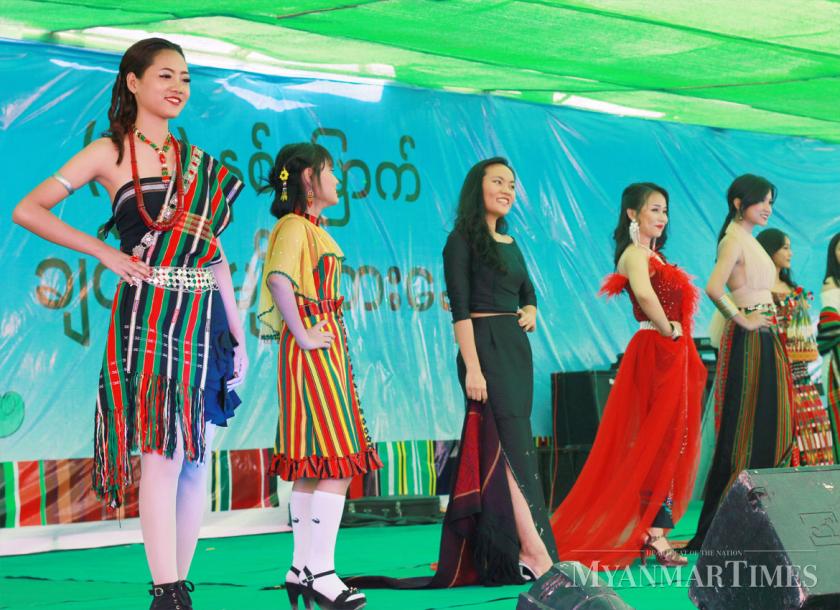
Chin fashion can be found throughout Myanmar, from trendy dress shops like Bayin to Aung San Suu Kyi’s choice of outfit for public speeches. And given the array of colors and patterns, as well as the different groups that wear them, it’s no surprise that dress also plays an important role in Chin courtship.
After a bout of Benjamin Sum songs, last year’s Myanmar Idol runner-up, the women stole this year’s Chin National Day celebrations with their display of color, style, and confidence.
With Dr. Martens boots and leggings, glittery nail polish, and dangly necklaces, the girls’ personal tastes complemented their traditional dresses. Some of the clothes were cut short with frilly hems, and others were stitched to flow like ball gowns.
Accentuating the body, the women wore clothes that were bright and individualistic. In evolutionary theory, they can be seen to highlight markers of fertility—highlighting lustrous skin, full red lips, and shapely bodies.
The men also wore striking costumes, though the colors were confined to the checks on their shirts, head dresses, or sashes (the “puandum”)—itself an important part of olden-day marriage rituals. Costumes often emphasize the male’s role in the tribe, like the warrior from Matupi who wore a grey shawl and wielded a large shield and hunting knife.
It’s these opposites, the contrast in colors and roles between masculine and feminine, that help create attraction—the source of energy at the start of the life cycle. The differences in fashion styles from the different towns and tribes also made for a very entertaining day.
Old and the new
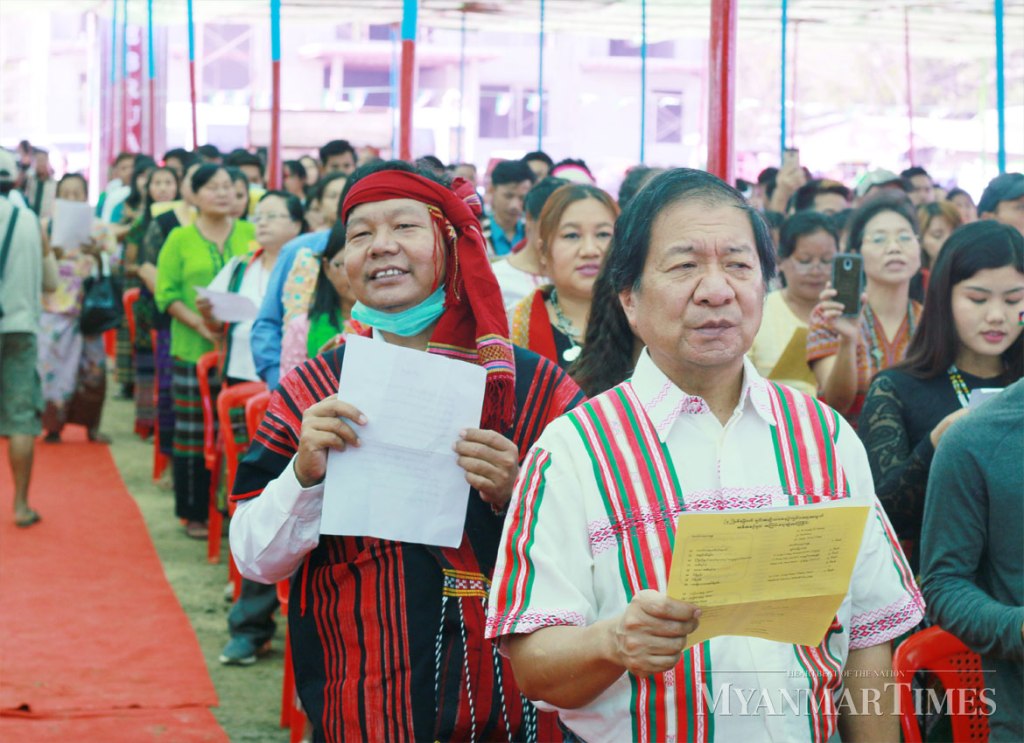
The dynamism of the young transitioned to a moment of reflection by the old, as a group of Mizo elders took to the stage at the end of the festival.
The polarity between the sexes was less distinctive, in dress and movement, as they stood side-by-side to pray for the sacred land of their forefathers.
Today’s Chin youth inherited their dances from these elders, and their children will someday make the dances their own too. Today’s young dancers will also one day stand proudly on stage to pray for the continued well-being of their people, after a little flirtatious dance or two.
This article was first published in The Myanmar Times
 Dating and Mating
Leave a comment